The open letter to the Hungarian people
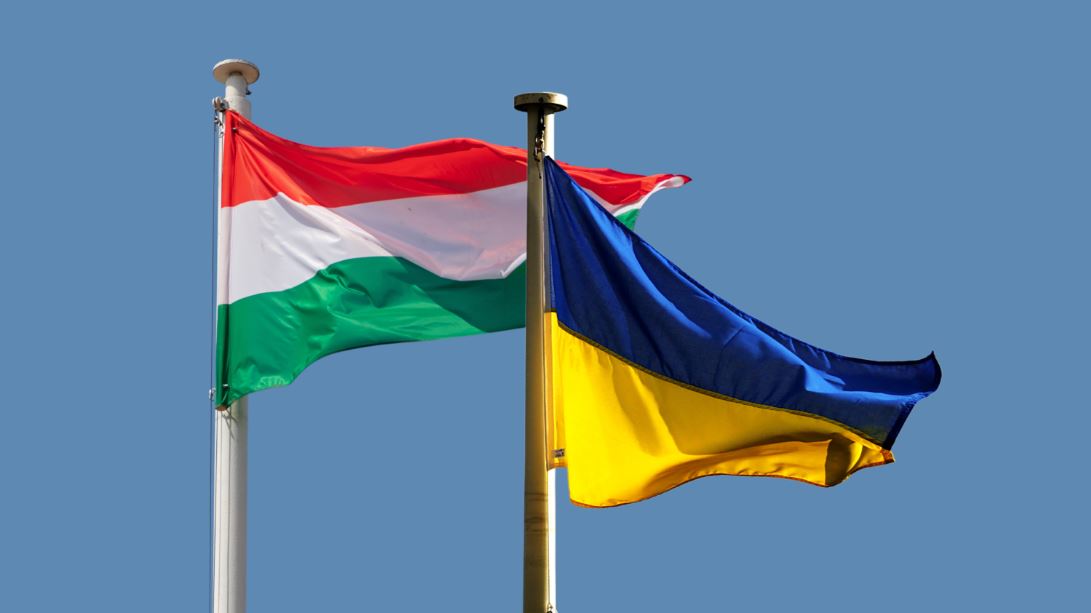
We, who have signed this letter, appeal to Hungarian society to convey to it the Ukrainian conservative point of view on the present and prospects of Hungary and Hungarian-Ukrainian relations.
Despite the numerous problems that have been observed in relations between our countries over the past ten years, there were many people in Ukraine who sympathized with some areas of the Hungarian government policy. These are the following spheres:
• Protecting Hungary from the invasion of migrants from non-European countries.
• Protecting children from the harmful influence of LGBTQ+ and opposing this ideology in general.
• Protecting Hungarian sovereignty from encroachments by globalist NGOs.
• Protecting Hungarian sovereignty from encroachments by Brussels; upholding the ideal of the European Union as a union of independent nation-states.
All these things gave hope that Central Europe would be able to establish itself as a region that preserves its ethnic and civilizational essence and, ultimately, normality itself. We hoped that Ukraine, having overcome military and socio-political turbulence, would also take a conservative path and join this island of real Europe as opposed to the Anti-Europe that Western globalist elites are building.
As for the disputes regarding the Hungarian minority in Zakarpattya, in our opinion, there is primarily a technical problem here, which has become the subject of mistakes by the governments of both countries.
Unfortunately, until 2014, the then Ukrainian governments ignored the need to integrate national minorities living in compact groups into Ukrainian society, in particular, their representatives’ mastery of the Ukrainian language. After the legislative changes in 2017, another extreme was observed: an attempt to overcome ignorance of the Ukrainian language by limiting education in the native language. Instead of searching for optimal educational formulas, the then Ukrainian authorities continued to defend their imperfect approach. Instead of dialogue, the Hungarian government chose a very aggressive tone of behavior, which only provoked intransigence on the part of the Ukrainian side. The enemies of Ukraine and Hungary in the east and west took advantage of this situation. In particular, there are well-known facts about the organization of anti-Hungarian provocations in Ukraine by Russian special services in order to turn Hungarian society against our country. On the other hand, the “Ukrainian” media financed by Soros conveyed to Ukrainians an extremely biased position towards Hungary.
We are convinced that political disputes over issues that require technical solutions should be a thing of the past, and the Hungarian minority in Zakarpattya should be what unites, not divides, our countries.
At the same time, we cannot ignore the fact that after Russia’s full-scale aggression against Ukraine since 2022, the policy of the Hungarian government towards our country has become hostile in many respects. For example, already in 2022, Hungary banned the transit of weapons for Ukraine through its territory. At the level of the European Union institutions, Budapest has repeatedly tried to block support for Ukraine and sanctions against Russia. Over the past few months, the anti-Ukrainian activities of the Hungarian government have become even more systematic. Thus, Hungary is weakening Ukraine and delaying the time for achieving peace.
Hungary’s actions against Ukraine clearly reflect an attempt to maintain good relations with Russia. Perhaps Budapest sees this dependence on Moscow as a way to advance its national interests. However, in reality, such dependence is harmful to Hungary from a strategic perspective, as well as immoral.
Russia is a force that is harmful to Central and Eastern Europe. After Ukraine, its next victims may be Estonia, Latvia, Lithuania, and Poland. By posing a threat to the countries of the region, Russia is thereby forcing them to become dependent on the West. The fact that Moscow has managed to drag some Central European countries, including Hungary, into its orbit has been a blow to the previous achievements of these countries in the consolidation process (this was expressed primarily in the fact that Orban’s position on the Russian-Ukrainian war has led to a deterioration in relations between Hungary and Poland and destroyed the previously achieved potential of the Visegrad Group). It should also be remembered that Russia is an enemy of the ethnic self-preservation of European peoples. Through its satellite Belarus, Moscow is sending thousands of migrants to the borders of the European Union.
As for the moral assessment of the Hungarian government’s actions towards Ukraine, let’s imagine a man whose neighbour’s house is on fire. This man’s car is blocking the passage of firefighters. But instead of driving his car away, he declares that he will not move it. This man justifies his behavior by saying that he does not want to waste his time, as well as fuel. Obviously, such a position is absurd and immoral. Even if this man had to spend not a few minutes, but an hour, and not a microscopic amount of fuel, but a whole tank, it was worth it for the sake of his neighbor, who has so much to lose.
Ukraine is in an even worse situation than someone whose house is on fire. Putin is not just trying to take away some of Ukraine’s territory. His ultimate goal is to destroy Ukrainians as a nation through assimilation. Despite this, we do not expect heroic self-sacrifice from other countries. But solidarity is what we have the right to count on. The actions of the Hungarian government towards Ukraine contradict the basic requirements of justice.
Hungary is currently entering a phase of intensified political struggle and is preparing for the upcoming elections. As citizens of another country, we cannot comment on the narrow domestic political issues of Hungary. At the same time, as Europeans and supporters of a conservative worldview, we want to express our hope that the decline in Viktor Orban’s rating will not lead to the discrediting of conservatism. We believe that the best features that today’s Hungary possesses are the merit not of Orban personally, but of the entire Hungarian society. We hope that after the upcoming elections, Hungary will remain a country that cherishes true European values, but at the same time will not make the mistaken bet on an alliance with a state that has caused it so much grief in the past and now remains an enemy of all of Europe. We are convinced that the key to the future of Ukrainians, Hungarians, and other peoples of Central and Eastern Europe is close consolidation. Only in this way can we protect our nations from challenges from the east and the west and remain who God created us to be.
Mykhailo Shevchenko, founder and director of the Ukrainian Institute for Conservative Studies and Innovations
Ihor Zahrebelny, PhD, head of the Analytical and Research Center “Political Theology”, serviceman of the Armed Forces of Ukraine
Eduard Yurchenko, PhD, co-founder of the Ukrainian Traditionalist Club, head of the NGO “Order”, serviceman of the National Guard of Ukraine
Ihor Plokhoy, head of the NGO “Christian Front”
Yuriy Honcharenko, co-founder of the NGO “Conservative Platform”
Andriy Olenchyk,PhD, co-founder of theNGO “Christian Rescue Service”
Yuriy Syrotyuk, president of the Non-governmental Analytical Center “Ukrainian Studies of Strategic Studies”, serviceman of the Armed Forces of Ukraine
Yuriy Oliynyk, PhD, director of the Non-governmental Analytical Center “Ukrainian Studies of Strategic Studies”, serviceman of the Armed Forces of Ukraine
Denys Kovalyov, PhD, historian, founder and head of the Finland Research Center, serviceman of the Armed Forces of Ukraine
Email: ukrhu.dialogue@gmail.com